The News
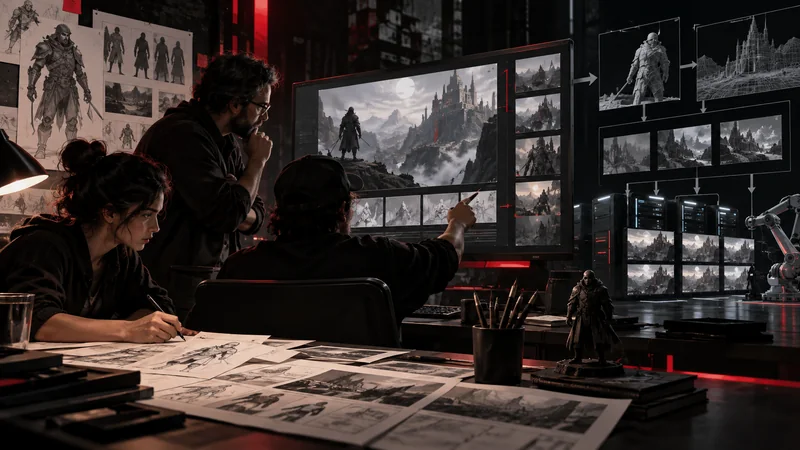
Playco says GPT-6 Astra cut manual fixes by 50% while its team built three themed game prototypes from the same grey-box foundation. The important part is not simply that Astra generated code. Playco is using the model inside Playbot, an AI-powered development environment that connects directly to Unity and Godot, allowing the model to edit scenes, run the game, test changes, find bugs, and iterate inside the engine.
The three prototypes were built from one shared grey-box starting point. According to Playco, most worked on the first attempt, and the team reported improvements in spatial reasoning, recreating visual references, UI responsiveness, and overall game feel compared with the previous model.
What's Actually Interesting
Game-development AI has spent a lot of time looking impressive in isolated demos: generate a script, create an asset, suggest some code. Playco's experiment is interesting because the loop is becoming much more complete.
A useful game-development agent has to understand more than source code. It needs to reason about where objects exist in a scene, whether an interface responds correctly, whether movement feels right, whether a reference image has been reproduced convincingly, and whether the game actually works when someone presses Play.
That is the shift here. Playbot gives the model access to the environment where the game is being made, then lets it inspect the result of its own work. The agent is no longer just handing a developer an answer. It can make a change, experience the consequence, and try again.
What Creators Can Do With It
The most compelling near-term use may be rapid prototyping rather than fully autonomous game creation.
If a designer has ten variations on a mechanic, theme, UI treatment, or level idea, an agent that can build and playtest them dramatically changes the cost of exploration. Ideas that used to remain sketches or conversations can become playable comparisons.
That matters because game development is full of decisions that are hard to make in the abstract. A mechanic can sound good and feel terrible. A composition can look right in concept art and fail once the player moves through it. Being able to produce more playable versions earlier could give small teams and individual creators a much wider creative search space.
It could also change the role of experienced developers. Instead of spending as much time executing every first pass, they can spend more time judging, directing, tuning, and deciding which experiments are worth pursuing.
Why It Matters
This is one of the clearest examples yet of AI moving from assistant to production collaborator inside a real game engine.
The 50% reduction in manual fixes is useful, but the bigger story is the closed loop: build, run, inspect, correct. Once an AI system can operate inside Unity or Godot and evaluate what it just created, the bottleneck begins shifting away from raw implementation and toward taste, direction, and design judgment.
That does not mean games suddenly make themselves. It means one developer may be able to explore far more ideas than before — and in entertainment, the ability to explore more possibilities before committing to one may be as important as making any single task faster.